There’s a way to lead
without shrinking yourself.
What is the Resilience Tree™?
The Resilience Tree™ is a research-based leadership framework that helps leaders understand what sustains their growth, navigate challenges with intention, and build resilience from the inside out.
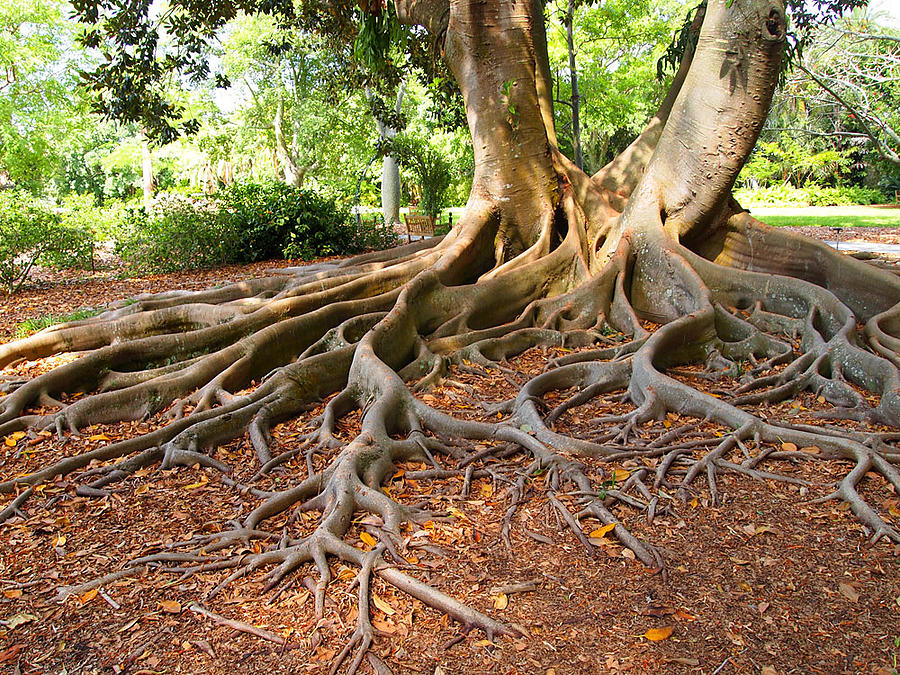
Resilience isn’t a single trait or a moment of strength, it’s a living system. Like any tree, it grows through four interconnected parts: Roots, Branches, Fruit, and Ecosystem. When one part is strengthened, the whole system grows stronger.
Because resilience was never meant to be carried alone.
What Makes the Resilience Tree™ Different?
Most leadership models focus on what leaders do. The Resilience Tree™ focuses on what sustains them.
And it starts from a simple truth: no tree grows alone.
Many resilience frameworks hand you a solitary burden; grit your teeth, push through, bounce back. The Resilience Tree™ rejects that. A leader’s growth depends as much on the soil they’re planted in as on their own strength. Resilience isn’t something you summon alone; it’s something you grow, tend, and are held up in.
That shift changes everything about how the model works.
It names what other models leave out.
Most leadership frameworks are written as if every leader walks into the same room on the same footing. The Resilience Tree™ was built from the lived experiences of women leaders of color; and it speaks honestly to the realities mainstream models skip: the weight of being the only one in the room, the scrutiny of being “the lowest paid yet highest praised,” the quiet cost of always having to prove you belong. You can’t build resilience against challenges no one will name.
It was built from real voices.
The model didn’t begin as a metaphor. It grew out of original doctoral research into how Black women advanced to senior leadership; and the language came from the women themselves. One participant described the people who believed in her, opened doors, and saw her potential before she did as her guardian angels. Those guardian angels became what the model now calls Branches; the relationships that hold a leader up.
It redefines support.
Traditional mentoring waits for the leader to ask. But asking for help can feel like a risk when you’re already working to be seen as capable. So the Resilience Tree™ moves the first step to the community: the tap on the shoulder, where a supervisor or peer recognizes potential and says, “You should go for that,” before they’re ever asked.
It protects the leader from herself, too.
Mainstream models read flawless, hyper-productive performance as a sign someone has it handled. The Resilience Tree™ knows better. For many high-achieving women, that polish can mask exhaustion; what the model names the Sisterella pattern: honoring everyone else while quietly depleting yourself. The model teaches self-fullness instead; the practice of filling your own cup first, so what you give to others comes from overflow, not from empty reserves.
This is a model that sees the whole leader; and the whole environment around her. Not just what she produces, but what keeps her standing.
The Four Components of the Resilience Tree™
🌱 ROOTS (Reflective Resilience)
The practices that ground you and restore your energy.
Branches (Relational Resilience)
The relationships that support your growth and expansion.
🍎 Fruit (Behavioral Resilience)
What you produce, and what you protect so your best work can emerge.
🌍 Ecosystem (Contextual Resilience)
The environments that shape whether you thrive or struggle to sustain your strengths.
The Story Behind the Model
I’m used to being the only one in the room with my intersection of identity.
For most of my career in higher education, I’ve been the only one (or one of very few) who shares my background. A Caribbean-American woman building a path through institutions that weren’t built with me in mind. I learned what it costs to be the one who represents everyone, to feel that a single misstep might close a door behind me for the next woman coming through. And I learned how easy it is, in those rooms, to make yourself smaller just to fit.
But I didn’t want to study what holds women like me back. I wanted to know what helps us last.
So for my doctoral research, I went looking for answers in the women who had made it—Black women who had risen to the highest levels of student affairs leadership at predominantly white institutions. I didn’t ask them what they’d survived. I asked them what sustained them. What grounded them when the ground kept shifting. Who believed in them before they believed in themselves. How they kept growing in soil that didn’t always want them to.
Their answers grew into a model.
One woman described the people who saw her potential and opened doors as her guardian angels. Another spoke of closing her office door in the middle of the day just to breathe and reset. And as I was finishing my dissertation, one participant wrote to tell me she was stepping down from her position; she had realized it was time to uproot and replant in an environment where she could finally thrive.
Again and again, a pattern emerged. The women who endured weren’t simply the toughest or the hardest-working. They were the ones who were rooted, who were held up, who gave from overflow rather than depletion, and who knew when to seek new ground. That pattern became the Resilience Tree™.
I built this model from their wisdom; and then I began living it myself, adding roots, tending branches, choosing my environment with intention. I can tell you it works, because I am more resilient, and more whole, than I have ever been.
The Resilience Tree™ began as research. It became a way of life. And now it’s an invitation to you, and to everyone walking alongside you; to lead without shrinking yourself.