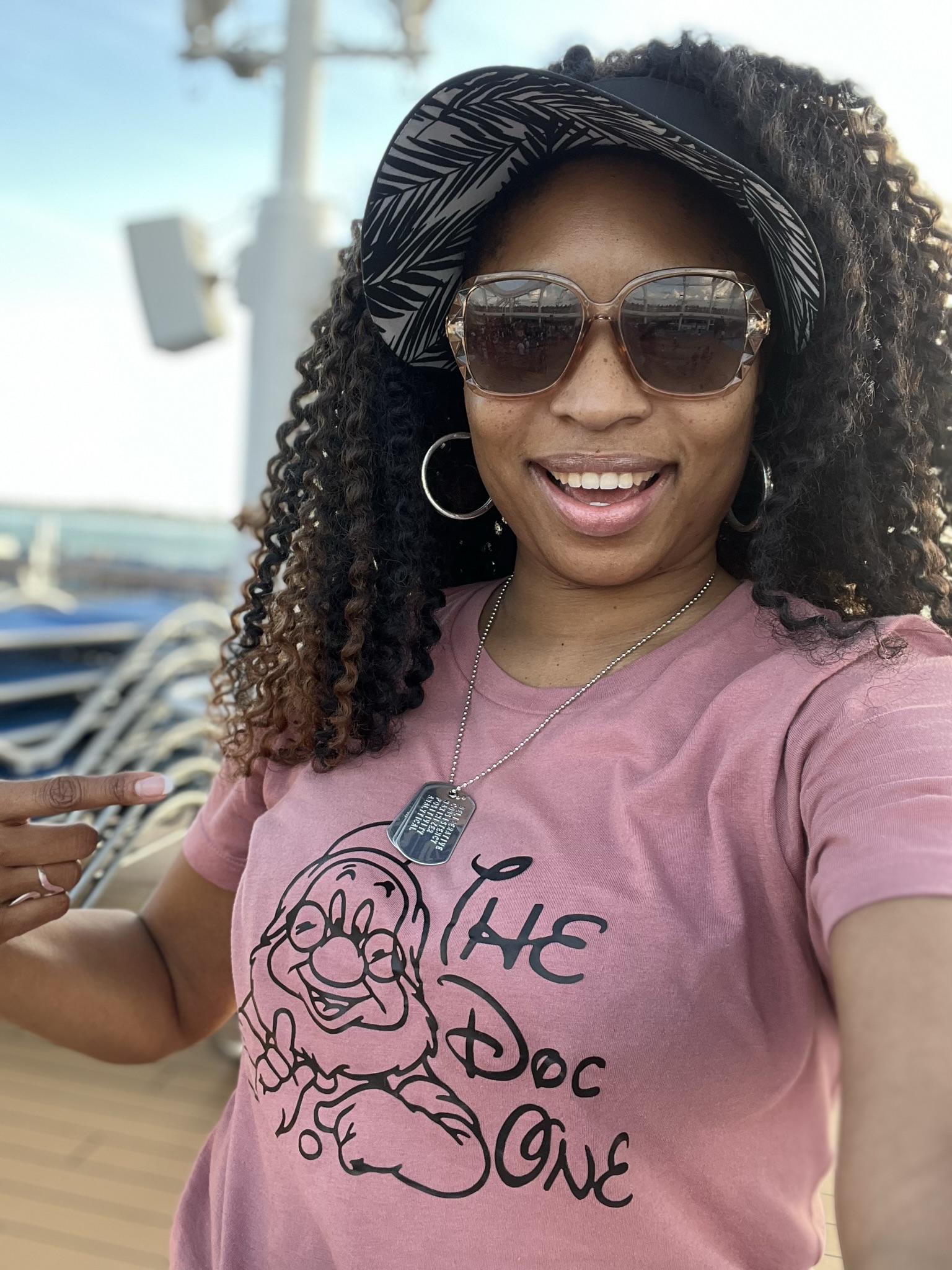
A Name, A History, A Title, and Why It Matters
Back in 2017, I wrote a blog post about struggling with the title of Doctor. I was honest about my imposter syndrome, my fear of being perceived as arrogant, and my complicated relationship with claiming something I had genuinely earned. A lot has happened since then (internally and externally) and I find myself returning to that post now because I need people to understand my why before they fill in the blank with their own answer.
So here it is. My why. The fuller, more evolved version.
A Name
First, You Need to Know What Sobers Means to Me
I was not always sure I wanted to be a Sobers.
Growing up in the United States, away from my father and away from Barbados where I was born, I carried some resentment about my last name. My mother and I did not share it. People heard it over the phone and came back with Silvers, or Sombers, or something else entirely. I did not understand why my name was different from my mom’s, and the story I had, incomplete as it turned out to be, did not make me feel good about it.
Then I got married. And honestly, I was relieved to take my husband’s name. It was easier to say. People got it right on the first try. There was even an element of surprise when people heard it over the phone and then met me, and I’ll be honest, I appreciated that. I kept my maiden name in the middle for years, hyphenated in spirit if not on paper. But eventually I dropped it. Changed my passport, my Social Security card, all of it. Fully let Sobers go.
Weeks later, my then husband asked for a divorce.
A few months after that, my mother came to visit and we went to lunch with a family friend from Barbados. My mother was telling her friend the story of my how I got my father’s last name. I was sitting right there, hearing it for the very first time, in my thirty-something years of living.
When I was born, I left the hospital with my mother’s last name. I was even christened with it. But the year I was born, the Prime Minister of Barbados, himself a man who had been called a bastard child his entire life, passed a law allowing fathers to legally claim children born out of wedlock. My father went to the court. He changed my name to Sobers. He did not discuss it with my mother first, which understandably hurt her, and she had carried that hurt quietly for decades. Some of it had landed on me without the context that would have changed everything.
What I heard as a child was: your father just went and changed your name without asking.
What I understood as an adult was: your father walked into a courtroom and said, in writing, before the law; she is mine and I want the world to know it.
He claimed me. He gave me his name. He said, without ambiguity, that he wanted me and wanted others to know I was part of him and his family.
Sobers is not just my last name. It is the record of my father choosing me.
And once I knew that; once I was sitting with the weight of what he had done, I had to ask myself a hard question. Why would I keep the name of a man who no longer wanted me, when my father had taken particular legal pains to give me his? He had gone to court. He had done the paperwork. He had claimed me. That clarity made reclaiming Sobers feel less like going backward and more like finally coming home.
So when I went back to being Dr. Sobers after my divorce, with that story finally in my chest where it belonged, it meant something entirely different than it ever had before. I was not just reclaiming a name. I was reclaiming what the name had always carried, even when I did not know it yet.
A History
It Has Never Been Easy to Claim
Even before I wrestled with the title Dr., I was wrestling with what people called me at all.
When I was closing on my first home in 2016, I had an email exchange with someone involved in the process who referred to me as Miss Sobers. I corrected him, politely, directly, and he apologized and adjusted. Done, right?
Except it wasn’t done for me. Not even close.
What followed internally was a full cross-examination of myself. He was just trying to do his job. You’re being petty. You’re going to come across as snooty. Uppity. Bigger than your britches. I ended up sending a follow-up email to soften my correction; to reassure him that I wasn’t upset with him, that I appreciated what he was doing. I performed graciousness to manage the discomfort my own self-advocacy had created.
And even after all of that, I still had to sit with why it bothered me so much. I landed eventually on this: Miss is what my family put on my mail when I was a child. It is how adults signal respect to someone they see as young, small, not yet arrived. So when he used it, regardless of his intent, what landed for me was: he sees me as a child. Someone not yet worthy of the full weight of a proper title.
That was 2016. I had a Doctorate. I was buying a house. And I was still being seen as Miss.
This is the landscape I was navigating long before I fully claimed Dr. Sobers. And it is part of why claiming it, once I did, became non-negotiable.
I Learned the Hard Way That Words Model Behavior
Early in my career in residence life, I tried something that seemed like a reasonable compromise: I asked students and staff to call me Shauna, but to introduce me to others as Dr. Sobers. Simple enough, right? They always agreed. They always meant it.
And then they forgot.
One of my Master’s-level supervisees, someone who is still a close friend to this day, genuinely tried to toggle between the two depending on the context. But one night, in the middle of a resident issue, she brought me in and introduced me to the student and their parents by saying: “This is Shauna.”
We talked about it afterward. And it was from that experience that I started stating clearly, for the first time, that my preference was Dr. Sobers. Not a request. A preference. My preference.
But I want to be honest about something: even once I started asking for it, I was not yet comfortable with it myself. I still stumbled when I introduced myself. It still felt like something I was reaching for rather than something I owned.
That changed after my first year working in Texas. I told my then graduate assistant that she could call me Shauna (I always gave people that out in those days) however she declined. She called me Dr. Sobers anyway, consistently, from the beginning. And something unexpected happened: I got used to hearing it. I started responding to it naturally. I gained confidence. And eventually, I started saying it, introducing myself that way, because it no longer felt foreign. It felt like mine.
My then graduate student has since earned a doctorate for her herself. And I remain grateful to her. She insisted on honoring me before I fully knew how to honor myself. That was the start.
Not long after, I met an executive director whose entire staff called her by her title and her surname. Witnessing that as a lived reality rather than an abstract possibility gave me hope and courage to follow suit. She showed me that it could be done, that it was being done, and that it was okay to want it for myself.
I want to be clear about something: my preference is not a commentary on other women with doctorates who choose to go by their first names. That is entirely their right and I respect it fully. I refer to people by whatever they prefer. This is simply what I prefer.
The Moment That Unlocked Everything
Before I could fully claim the title, I had to understand why I was resisting it.
Back when I was in the thick of finishing my dissertation, I was seeing a counselor. I was struggling with the writing, with the finish line that kept moving, with something I could not quite name. My then counselor shared something with me from her research that stopped me cold. She told me that in underrepresented communities, people are often distrustful of doctors, not because of anything personal, but because they have never known anyone who looked like them in that role. They knew nurses. They felt comfortable with nurses. They confided in nurses. But doctors? Doctors were an unknown, an other. And so they avoided them.
What she helped me see was that I was doing the same thing to myself. I had spent my whole life without seeing someone who looked like me hold this title, so somewhere inside me I had built up assumptions about who a doctor was supposed to be; how they were supposed to talk, how they were supposed to carry themselves, how different they were from me. And taking on this identity felt like becoming someone else. Like losing Shauna.
She told me it did not have to work that way. She affirmed that the title did not have to shift who I was. If anything I would shift the title. I did not have to become the doctor I had imagined in my head. I could still be myself; that young girl from Barbados, raised by her mother, and I could now also be Dr. Sobers. I could show people what a doctor looks like when it looks like me.
That conversation was my unlock. I finished my dissertation. I accepted the title. And I began, slowly and imperfectly, to claim it.
A Title
On Titles, Gender, and Who Gets to Keep Theirs
I have watched men with doctorates ask people to call them by their first name and somehow still get introduced in every meeting as Dr. When women, particularly Black women, make the same request, or the inverse, we get reduced. Forgotten. Introduced by first name in the same ceremony where our male counterpart receives his full title.
There is a version of this that plays out in medicine too: nurses and reception staff go by first names, the doctor goes by Dr. and their surname; unless the doctor is a woman, in which case she is encouraged to use her first name so she seems friendlier. As if the male doctor is not perceived as friendly. As if warmth and authority cannot coexist in a woman’s body. It is not about friendliness. It is a socialized gender dynamic, and I am not interested in participating in it.
I have also had donors, people writing significant checks to the institution, insistent on finding out my first name so they could use it instead of what it says on my name tag, “Dr. Sobers”. I understand the impulse toward familiarity and I know that there is a difference between warmth and erasure, and I have learned to name it.
Yes, There Is Baggage. I’m Carrying It Intentionally.
In 2017 I wrote about imposter syndrome, about being afraid I wasn’t enough to claim the title, about enjoying the “surprise effect” when people found out later and complimented me on being grounded and humble. I understand now that I was, in part, performing a version of myself that made other people comfortable with my achievement. I was preemptively apologizing for it.
I am not doing that anymore.
When I hear my surname, I think about my dad; I think about where I come from and how I got here. It is not a small thing. And yet when someone, who knows my preference, still calls me Shauna, I try to assume positive intent and It does not always feel neutral. Sometimes I wonder what is behind that choice as it can, at times, feel like a quiet insistence on a version of me that is smaller, more familiar, and easier to place. I question what it means to someone when they resist using a person’s preferred name? What does it cost them to say it? Is the intention to try to diminish me and what I could represent? Those are questions worth sitting with, for all of us.
Why It Matters
I Didn’t Grow Up Seeing This. That’s Exactly Why It Matters.
I did not grow up knowing anyone who looked like me with a Doctorate. No one in my family had the title. No one in my immediate community knew that or how that was possible for them. So now when I use the title when I introduce myself and someone calls me Dr. Sobers it is not just a professional courtesy. It is a data point. It is evidence, living and breathing in real time, that someone with my particular intersection of identities can hold this title.
As a Black woman, I need people who look like me to hear it. But honestly? I need people who don’t look like me to hear it even more. Every time someone who wouldn’t have expected it hears “Dr. Sobers” and then meets or sees me, and has to reconcile whatever assumption they walked in with, something shifts. Maybe something small. Maybe something significant. But something. That is my responsibility to show up for. It is a burden I have chosen to carry because I believe in what each shift can dismantle.
One of the moments that stays with me is when an employee of mine; someone I had recruited, hired, and supervised, introduced me as Dr. Sobers to her five year old daughter. That little girl is growing up with a picture in her mind of what a doctor can look like. She does not have to unlearn anything. She just knows. That is the whole point. That is what is possible when the people around me embrace this opportunity; not just for me, but for everyone watching.
What I Am Asking For Is Simple
Call me Dr. Sobers.
Not because I think I am better than anyone. I genuinely believe I can learn from every person in any room regardless of title, age, or position. But because every time you say it, you are participating in something larger than a name. You are normalizing the idea that a Black woman can hold this title and take up this space without apology.
And now you know that the name after the title, Sobers, is also not incidental. It is the name my father walked into a courtroom to give me. It is the name I once let go of, and had to fight to regain, with a fuller understanding of what it has always meant – that I am here and that I belong.
When you call me Dr. Sobers, you are not just acknowledging my education. You are helping me celebrate my history, my inheritance, the choice my father made, and the choice I make every day to show up in spaces where people would not expect me; and to do so completely, without apology, without shrinking.
This post builds on two earlier pieces: “Miss, Ms, Mrs…No, Call Me Dr.” (November 2, 2016) and “Coming to Terms with the Title Dr.” (September 24, 2017).
This post was written with the assistance of AI as a drafting tool.