What Partner Dance Teaches Us About Leadership and Followership
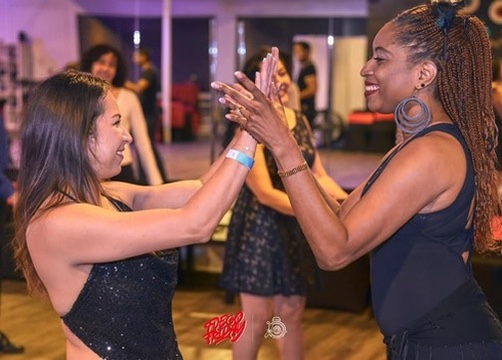
Most people think leadership looks like choreography.
One person decides the steps.
Everyone else follows along.
But anyone who has ever learned social partner dance (salsa, bachata, swing) knows that isn’t how dancing actually works.
Partner dancing isn’t choreography.
It’s a conversation in motion.
And that conversation reveals something powerful about leadership.
The Moment Everyone Recognizes
Imagine you’re at a wedding, a gala, or a family celebration. The music starts and someone asks you to dance.
You may not know them.
You may not know the steps.
But somehow, if both people are paying attention, you can still move together.
Why?
Because partner dance isn’t about memorizing moves. It’s about learning how to communicate without words.
A Dance Is More Than Two People
When two people partner dance, there are actually several conversations happening at once.
First, there is the conversation between partners.
One person offers direction or an invitation through movement. The other person interprets that invitation and responds.
But that’s only part of the story.
Both dancers are also listening to the music.
The rhythm, the tempo, the energy of the instruments; all of it shapes how the dance unfolds.
So the dance becomes something dynamic and improvisational.
The partners are responding to each other, and they are responding to the music.
It’s a three-way conversation in motion.
Followership Is Not Passive
In many organizations, the word “followership” can sound passive.
But on the dance floor, following requires remarkable awareness.
A good follower is constantly:
- sensing subtle shifts in movement
- interpreting intention
- adjusting timing
- adding style and expression
They are not simply copying steps.
They are co-creating the dance.
In that sense, followership is not the absence of leadership.
It is another form of leadership.
Leadership Lives in the Connection
What makes partner dance work is not control.
It’s connection.
When communication is clear and respectful, even a beginner can move confidently with someone they’ve never danced with before.
That happens because both people are paying attention.
Both people are listening.
Both people are willing to respond.
Leadership works the same way.
Leadership does not live in a title or position.
Leadership lives in the relationship between people.
Improvisation, Not Choreography
On a stage performance, dancers memorize choreography.
But social dancing is different.
Each partner brings their own style.
Each song creates a different mood.
Each moment invites something new.
You can dance to the same song a hundred times and still create a completely different dance every time.
Leadership is similar.
It is not a script you memorize.
It is a skill you practice (listening, responding, adjusting, and creating something together in real time).
The Leadership Lesson Hidden in the Dance
Partner dance teaches a simple but profound lesson:
Leadership isn’t about controlling people.
It’s about creating the kind of connection where people can move with you.
It requires trust.
It requires attention.
It requires space for interpretation and creativity.
And just like dancing, it works best when everyone involved is fully present in the moment.
The Takeaway
Partner dance reminds us that leadership isn’t choreography.
It’s a conversation in motion.
And when we learn how to listen (to our partners, to our environment, and to the rhythm around us) we discover something powerful:
The best leaders don’t force the dance.
They create the conditions where the dance can emerge.